
What Is a Backflow Preventer and Why Does It Matter for Your Home's Water?
- 24 Hour Plumbing
- Jul 9
- 5 min read
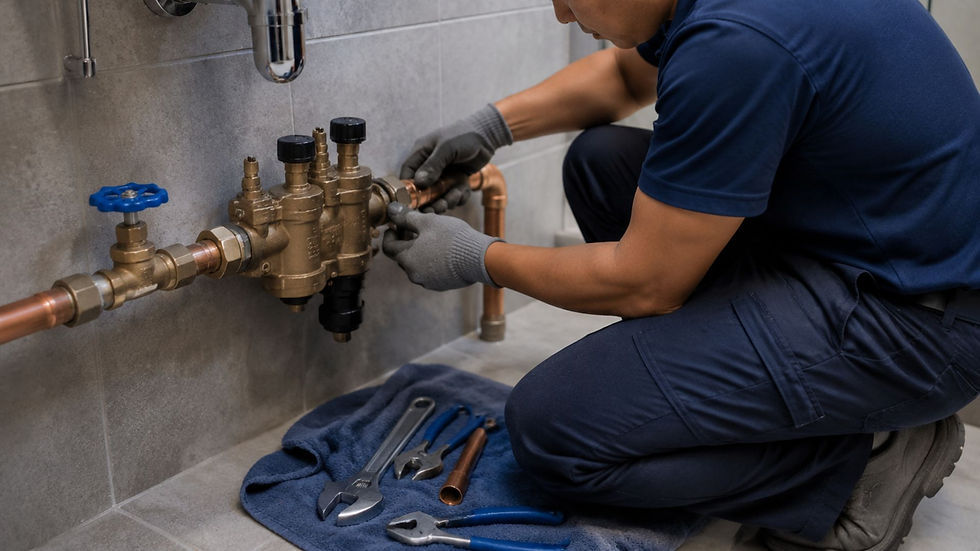
Most homeowners never think about backflow until something goes wrong. And when it does go wrong, it can mean contaminated drinking water flowing straight from your pipes into a glass, a pot, or a child's hands. That is a problem worth understanding before it happens.
So what exactly is a backflow preventer, and why should you care about it? Let us break it down in plain terms.
What Is Backflow and Why Is It a Problem?
Backflow is exactly what it sounds like - water flowing in the wrong direction through your plumbing. Under normal conditions, water moves from the municipal water supply into your home at a steady pressure. But when that pressure drops suddenly, water can reverse course and flow backward into the pipes that are supposed to deliver clean water to you.
This reversal can pull in contaminated fluid from irrigation systems, boilers, fire sprinkler systems, or garden hose connections sitting in a puddle of dirty water. That contaminated water can then mix with your drinking water supply without any visible warning signs.
The two main causes of backflow are back pressure and back siphonage. Back pressure happens when downstream pressure exceeds supply pressure - common in systems with pumps or boilers. Back siphonage occurs when a vacuum forms in the supply line, often during a water main break or heavy firefighting activity nearby.
What Is a Backflow Prevention Device?
A backflow prevention device is a mechanical assembly installed in your plumbing piping to stop water from flowing in reverse. Think of it as a one-way gate for your water supply. It allows water to move forward into your home but physically blocks it from reversing direction.
These devices are used in residential, commercial, and fire protection systems. They are required by plumbing codes in many situations, especially when there is a direct connection between the potable water supply and a potential source of contamination or wastewater.
Types of Backflow Preventers
There are several types of backflow prevention devices, and the right one depends on the level of hazard and the specific plumbing application.
Air gap (plumbing) - This is the simplest form. It is the physical separation between the water outlet and any potential source of contamination. No mechanical parts are involved.
Atmospheric vacuum breaker - Often used for irrigation and garden hose connections, this device opens to admit air when pressure drops, preventing a vacuum from pulling water backward.
Vacuum breaker - Similar in function to the atmospheric type, but it can be installed on individual tap (valve) connections to protect against back siphonage.
Double-check valve - A pair of independently operating check valves in a single assembly. This is commonly used for low-to-medium hazard situations like fire sprinkler systems and irrigation lines.
Reduced pressure zone device (RPZ) - Considered the most reliable for high-hazard connections. It uses two check valves and a relief valve that opens to discharge water if either check valve fails. This device actively prevents both back pressure and back siphonage.
Each of these serves a real purpose depending on what is connected to your water supply and how much risk of contamination exists.
Where Are Backflow Preventers Typically Installed?
Backflow preventers show up in more places around a home or commercial property than most people realize.
Irrigation systems are one of the most common locations. A garden hose left submerged in a fertilizer bucket or a lawn irrigation line running near a sewage area can both create backflow risks. A proper valve or vacuum breaker on those connections protects the rest of your water supply.
Fire sprinkler systems are another key location, especially in commercial buildings. Water in these systems can sit stagnant for long periods and should never be allowed to flow back into the drinking water supply. A double-check valve or reduced-pressure zone device is typically required here.
Boiler systems connected to a home's water line also require protection. The fluid inside a boiler often contains chemical treatments that would cause serious water pollution if allowed to back-siphon into the main supply.
Even something as simple as a garden hose connected to a utility sink or chemical sprayer can create a backflow risk. That is why many outdoor spigots now include a built-in atmospheric vacuum breaker.
Why Backflow Prevention Matters for Water Quality
The reason plumbing codes require backflow preventers is simple: contamination of the drinking water supply is a serious public health risk. The American Backflow Prevention Association has documented cases where backflow events introduced sewage, pesticides, and industrial chemicals into residential water lines.
Most backflow events go unnoticed because the water looks and smells the same. The contamination is invisible, which makes proper device installation and regular inspection all the more critical.
Municipalities take this seriously, which is why many water systems in Tennessee require annual testing and inspection of backflow prevention devices - especially for commercial properties, irrigation systems connected to the public water supply, and any facility with a shutdown valve that separates a hazardous water system from the main line.
Does Your Home Need a Backflow Preventer?
If you have an irrigation system, a boiler, a fire protection connection, or any kind of chemical mixing station connected to your water supply, the answer is almost certainly yes.
Even without those systems, older homes may have plumbing configurations that lack adequate backflow protection. A licensed plumber can assess your piping setup and let you know if there are vulnerable points where contamination could enter.
The inspection process is straightforward. A qualified plumber tests each device to confirm that the check valve and relief valve are operating correctly. If a device fails, it needs to be repaired or replaced promptly - there is no safe workaround when drinking water contamination is the risk.
What Happens If You Ignore Backflow Prevention?
Ignoring this issue does not just create a health risk - it can also create liability. If your irrigation system or commercial connection causes pollution in a shared water line, you may be responsible for the damage.
On a more personal level, contaminated drinking water can cause illness that is difficult to trace back to its source. By the time anyone investigates, the backflow event has already passed.
Proper installation of a backflow prevention device is a relatively small investment compared to the cost of remediation, illness, or legal exposure.
How to Make Sure Your Home’s Backflow Protection Is Working
A backflow preventer is one of those plumbing components that works quietly in the background - until it does not. Understanding what it does and making sure yours is properly installed and tested is a straightforward way to protect your home's water quality.
If you are unsure whether your property has adequate backflow protection, the team at Twenty Four Hour Plumbing is ready to help. Reach out at 615-785-3827 to schedule an inspection and get honest answers from licensed local plumbers who know Middle Tennessee water systems inside and out.


Comments